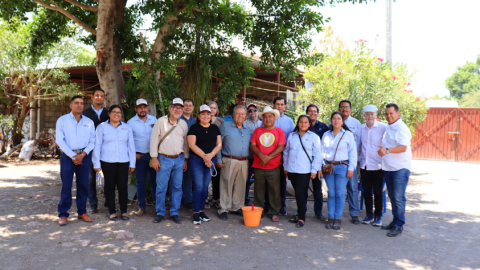
A new cross-border payments system is set to facilitate remittances between the United States and Mexico through 140 community banks focused on rural areas. This initiative is spearheaded by the Interledger Foundation, an organization committed to establishing an open and interoperable payment network, in collaboration with the People’s Clearinghouse, which partners with credit unions and community banks across Mexico.
The Interledger Foundation highlights that many Mexicans in the U.S. rely on private money transfer services that often impose hefty fees, high minimum transaction amounts, and considerable waiting periods. Such services also fail to empower local financial institutions and their communities, perpetuating cash-based economies that do not channel capital into community bank accounts. Consequently, these communities forfeit the opportunity for access to funds that could spur innovation and sustainable growth.
The aim of both the Interledger Foundation and People’s Clearinghouse is to equip rural community banks with the necessary digital framework and secure payment options to turn remittance flows into capital for local investment. This initiative will enable direct remittance deposits into clients’ accounts, leading to an increase in local loans and investments.
In order to implement this vision, the People’s Clearinghouse plans to utilize the Interledger Protocol—an open, neutral standard for money transfer—and Rafiki software to establish interconnected networks. This framework will empower users to directly send money to local community banks and credit unions instead of relying on private money transfer services.
Isabel Cruz, chairwoman of the People’s Clearinghouse, stated, “Our goal is to open doors for community banks so they can authorize transfers regardless of where the payments originate. Collaborating with organizations like the Interledger Foundation is essential, especially considering the lack of motivation for U.S. financial entities to enhance infrastructure for rural banks. For Mexican communities and residents, an efficient and affordable payment gateway offers significant social and financial advantages.”
The project will include the 140 members of the Mexican Association of Social Sector Credit Unions, representing a network of community banks in rural Mexico. However, the Interledger Foundation, which is significantly investing in this initiative, envisions that this new payment system will serve as a model that can be adapted globally for other underserved and rural populations.
Briana Marbury, CEO of the Interledger Foundation, expressed, “We see the work being done by the People’s Clearinghouse in Mexico as a guide that other regions worldwide can use to democratize payments in underserved areas. Historically, cross-border remittances have been controlled by a small number of companies that profit from high fees, preying on vulnerable communities. We are determined to alter this narrative, one country at a time.”