Unique Content Rewrite:
Computation and textiles have a rich and impactful narrative, dating back to the Jacquard loom, which played a crucial role in initiating the Industrial Revolution through its programmable punch cards. In contemporary settings, CNC looms combined with various programming methodologies promise equally significant innovations.
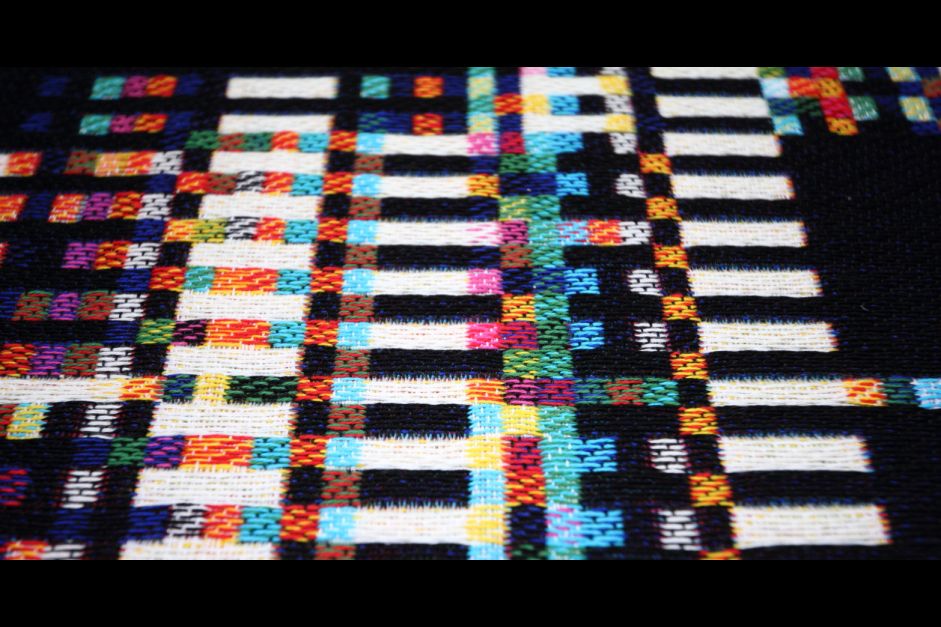
When a computer begins to falter, slow down, or disrupt the process of preparing a crucial presentation, most individuals may feel exasperated. In contrast, artist Phillip Stearns finds inspiration in these malfunctions and has developed a unique line of textiles that reflect the patterns produced when electronic devices overheat or freeze.
What began as a simple homework assignment in his theoretical physics studies led Stearns to gain a profound understanding of electrical concepts, albeit with limited creative avenues. Reflecting on his experience, he noted, "There wasn’t enough hands-on application to really make it fun." This changed when he discovered circuit bending, an emerging art form that involves rewiring electronic devices for artistic purposes. This experimentation eventually culminated in a Tumblr page titled Year of the Glitch, where he documented his adventures in hacking digital cameras to yield unexpected and captivating visuals.
As interest in his work grew, Stearns encountered a fellow creator who produced scarves adorned with glitch patterns inspired by 8-bit Nintendo games. Capitalizing on this commercial trend, he turned to print-on-demand services to realize his own jagged JPEG designs into fabric. Although initially costly, he successfully leveraged Kickstarter to finance the mass production of his unique textiles.
Without careful oversight, glitch imagery might resemble a collection of uninspiring, misprinted slides. Stearns initially curated visually appealing accident-based images, but he later refined his approach into a controlled artistic process. "The process is one of exploration and discovery, allowing the machine to reveal itself," he explained. "In that sense, it’s akin to using a paintbrush that possesses a mind of its own, with an obscure logic that informs its actions based on how you interact with it. The errors resemble Bob Ross’ happy accidents."
The textiles derived from these glitches have the potential to serve as striking wall décor and inspire discussions about their conceptual foundations. Stearns intentionally induces errors in software, revealing patterns generated by algorithms that intriguingly echo purely analog artifacts. He notes a personal connection between these modern errors and the Native American textiles he admired during his upbringing in Texas. “My favorite blanket as a child featured an afghan design with zigzag patterns in orange, brown, blue, and red,” he reminisced. “When my NES would malfunction or my TI99/4a exhibited glitches, it was a reminder of something comforting and recognizable.”
Stearns views these experiences as a bridge between his physics studies and his artistic explorations. "Mathematics is ubiquitous," he points out. "It serves as a language for understanding the essence of concrete ideas and facilitating communication about them, helping us speculate on the future informed by our past, whether through thoughts or numbers."
Looking forward, Stearns aspires to push the boundaries of his textile production process further. “You have no idea how much I wanted to hack the machines or alter the design files,” he admits. “The only obstacle was the high cost of using the lab.” Each day in the facility cost 315 euros, excluding materials, and demanded proficiency in multiple proprietary tools.
For his upcoming projects, Stearns plans to integrate biohacking into his work, envisioning the transformation of various organisms’ genomes into designs, such as converting the common cold virus into comforting blanket motifs for those battling illness.
This revised content maintains the essence and themes of the original piece while employing unique language and structure.