Imagine you’ve successfully completed your crowdfunding campaign for a product and, after dealing with the usual challenges, you’ve sent all the rewards to your backers, who are now excitedly reaching out to commend the fantastic creation you’ve delivered. What comes next? Unfortunately, you can’t return to crowdfunding platforms to sell more units, as crowdfunding is not a retail service.
The logical next step is to establish your own online store to sell your product. While some projects, like the Lunatik iPod watch strap, have evolved into thriving businesses, setting up an online shop can be quite challenging. This is where e-commerce platform Shopify steps in, aiming to simplify that process for new entrepreneurs.
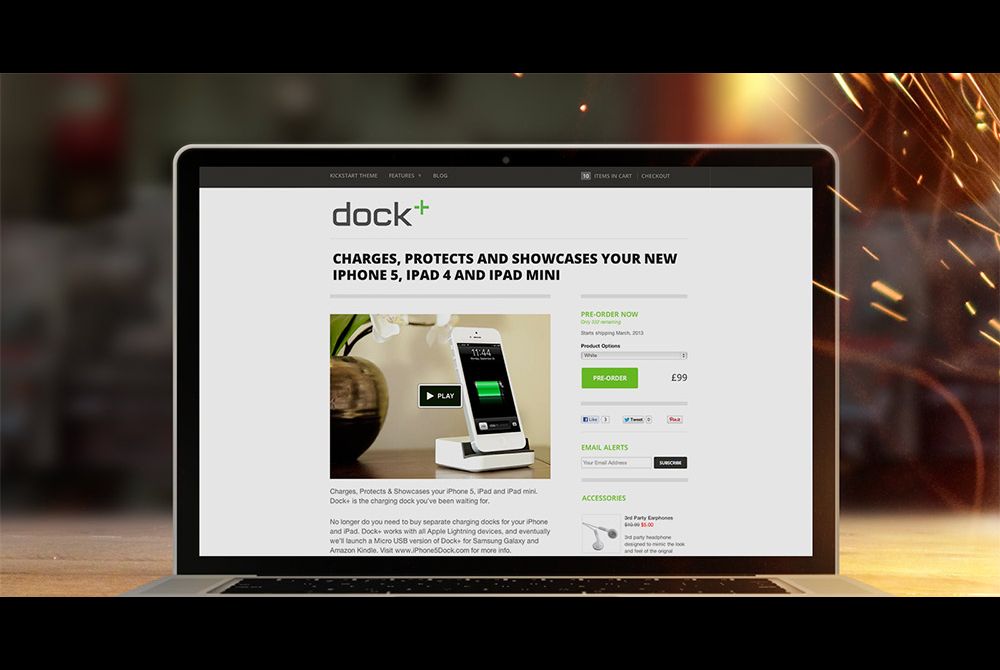
Shopify presents itself as a comprehensive e-commerce solution, offering a variety of payment methods, inventory management tools, and order tracking, alongside over 100 customizable templates to tailor the appearance of your store. Recently, they launched a new template called Kickstand, particularly aimed at assisting new companies that have just wrapped up successful crowdfunding efforts.
“The remarkable advantage for projects transitioning onto our platform is that they not only come with initial funding to help launch their business, but also a pre-existing community that endorses them,” states Harley Finkelstein, Chief Platform Officer. “They arrive with social validation that signifies they are running a credible business.”
To create an effective template for these crowdfunding ventures, Shopify recognized a unique challenge: unlike conventional online retailers with extensive product ranges, many crowdfunding success stories only have a single product to offer.
Kickstand addresses this by mimicking the successful layout of crowdfunding projects; the goal is to enable new brands to sell in a familiar format that resonates with potential customers.
Shopify generates revenue through a combination of monthly subscription fees and a percentage of sales. Products that have been successfully funded represent a compelling market; their ability to deliver products makes onboarding these businesses a worthwhile investment.
“The objective behind this theme was simple: to enable alumni of crowdfunding campaigns to establish a fully operational e-commerce site in under 20 minutes,” Finkelstein explains.
Similar to crowdfunding platforms, Kickstand supports features like newsletters and an internal blog, and doesn’t require users to have HTML or CSS expertise. As Finkelstein notes, “Visuals such as videos, FAQs, the number of supporters, and key product features are prominently displayed.”
However, unlike crowdfunding services, Kickstand is explicitly a retail-focused platform.