Readers might recall when I shared Ethan Perlstein’s initiative to fund his scientific research through crowdfunding. Since that announcement, Ethan has been merging two of my passions: innovative methods for funding science and network analysis. He aims to raise $25,000 while exploring which conditions and connections can yield the highest monetary returns, with network analysis playing a key role in this process.
Some of his analyses have examined the statistical trends of the contributions received thus far. His findings indicate that donations are not received at a steady pace; instead, there tends to be a surge at the start and end of the campaign, with a lull in between. Additionally, Ethan recently shared an analysis of his Facebook acquaintances, highlighting who chose to donate and who did not.
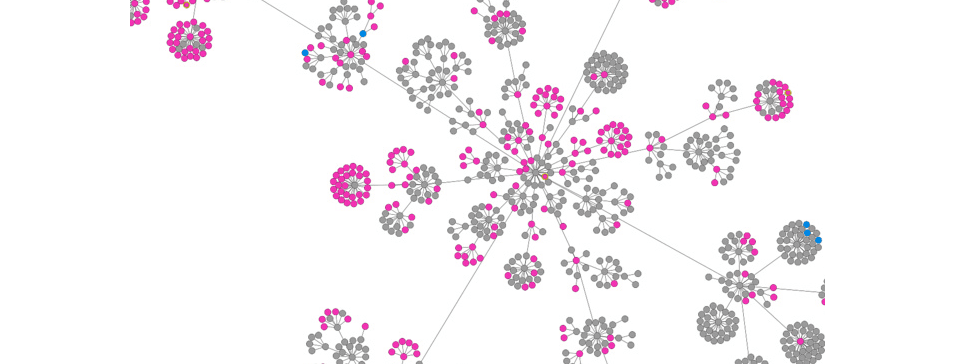
In this analysis, donors are represented in yellow, while non-donors are shown in blue. The size of each node corresponds to the number of connections within the network. The resulting visualization appears chaotic, lacking clear clusters of donations, making it challenging to discern any pattern of influence. However, it’s encouraging to observe that around 10% of the network has contributed.
Regarding the amounts donated, there does not appear to be a strong correlation between the number of connections in the network and the donation levels. It seems that only individuals with numerous connections tend to make larger contributions, although significant donations also come from outside the Facebook network.
Regardless of whether these analyses yield clear conclusions, there’s a pressing need for more efforts like this. Individuals working on crowdfunding initiatives should maintain transparency about their processes, highlighting both successes and challenges. This marks an important step toward a broader understanding of how to effectively fund scientific research.
For those interested, support for this endeavor can be found here.