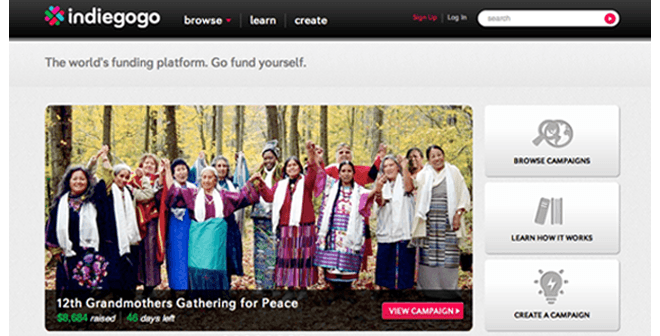
Danae Ringelmann, co-founder of crowdfunding platform Indiegogo, is making significant strides toward her mission of democratizing funding, which she set in motion when the company launched in 2008.
"In a world where everyone is funding everything, the traditional gatekeeper role will soon be irrelevant," she explained during an interview at Web Summit 2012. "Who determines who is allowed to raise funds? We believe that no one should have the authority to make that call. Ideally, we want a system where the best ideas prevail based on merit, rather than personal biases. Our goal is to truly democratize funding."
With this philosophy in mind, Indiegogo has expanded its reach to over 200 countries, facilitating projects like the Bug-a-Salt and the Tesla museum, while also supporting initiatives such as a kidney transplant for a Congolese pastor.
Cathy Pearson, a successful campaigner who directed and produced a film on picture editor John G Morris, shared that she invested around three months into crafting her pitch for Indiegogo, ultimately raising 40 percent of her film’s total budget.
Onstage at Web Summit, Pearson expressed hope that broadcasters would eventually recognize the platform as a viable funding source. In the meantime, almost anything legal can be pitched on the site.
Utilizing the "gogo factor," a proprietary algorithm that measures campaign activity and influences project placement based on analyzed data, the success—or failure—of a campaign quickly becomes apparent. Ringelmann describes it as the "cream rising to the top," reflecting the transparency that enables a truly democratic process.
How can a campaign secure a coveted spot on the homepage? Ringelmann notes that the company has accumulated five years of data to understand "what matters and what doesn’t" for successful campaign strategies, pinpointing several key factors. Here are her recommendations for enhancing the gogo factor:
Have a Clear and Transparent Funding Goal and Deadline:
Determine how much you need to raise, the timeframe, and the purpose of the funds. Be specific about fund usage. You don’t have to secure your entire budget in one go; rather, focus on the current amount needed and what that will achieve for your project. A goal that is too ambitious can lead to confusion regarding fund allocation, or reflect an unrealistic expectation based on your network size.
Consider Breaking Up Your Funding into Stages:
Many successful projects return with multiple campaigns to address different funding phases. It often benefits project creators to segment their total funding needs into more manageable increments. Achieving smaller targets fosters confidence and sets a solid foundation for future fundraising endeavors.