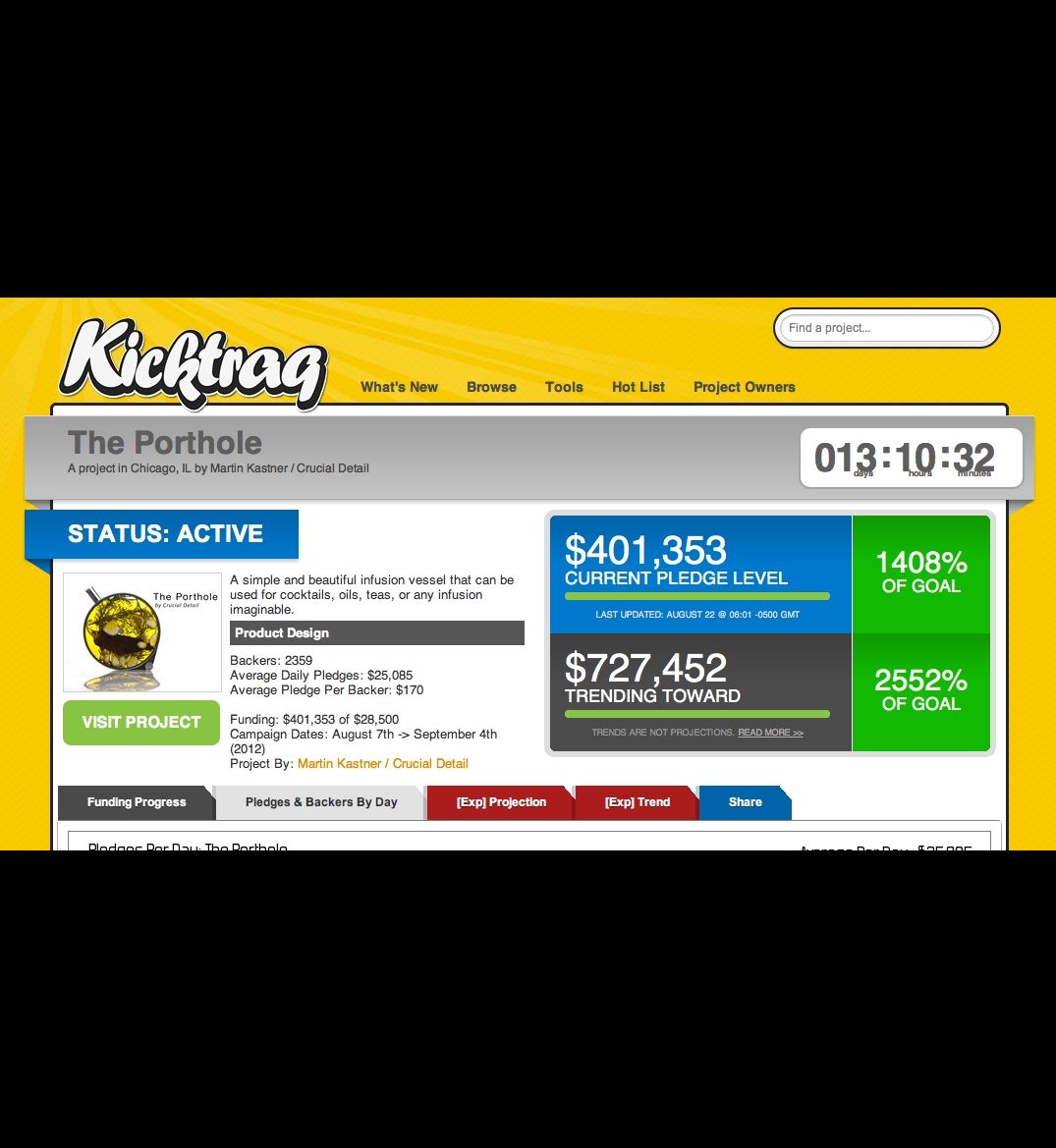
It seems obvious in hindsight: an analytics tool to monitor Kickstarter projects was a necessity. Yet, since the platform didn’t create one, an individual from the crowd stepped in. That individual is Adam Clark, an engineer and self-proclaimed “data enthusiast.” His creation, Kicktraq, is designed to visualize the funding progression of any campaign on the platform.
Whether you’re a creator assessing if your project is on track, a researcher analyzing trends in Kickstarter data, or a backer looking for potentially successful ventures, Kicktraq proves to be an invaluable resource. Its dashboard offers a quick overview of funding speed, daily amounts raised, the influx of new backers, the average pledge amount, and other pertinent details.
The tool also illuminates what factors drive activity on the platform. For instance, do tweets from major blogs influence funding? The answer is affirmative — just observe the funding spike on August 20, which coincided with a notable mention on a popular site.
Clark attributes his project to a deep passion for numbers: “I’m a data junkie, so it didn’t take long before I started logging campaigns I supported in a spreadsheet. This evolved into analyzing trends to determine whether project A would succeed as well as project B.” These spreadsheets became the foundation for a web application that permitted more comprehensive and advanced data manipulation.
Kicktraq gained significant traction when Clark shared some of his dynamic charts on boardgamegeek.com, a well-known board gaming community. “I accidentally embedded dynamic charts instead of static ones,” he recalls. The following day, he found himself overwhelmed by an influx, escalating from a handful of projects to over 200. Users recognized they could alter the URL of his graphs to analyze any project they wished. Overnight, hundreds began utilizing his graphs and sharing them, prompting him to enhance the site’s design and launch it publicly.
One of the most compelling aspects of visualizing the data, Clark notes, is observing how similar campaigns can yield vastly different results: “Being able to track the effect of a single tweet on a campaign is truly fascinating. The data highlights how many factors influence a crowdfunding initiative, and many of them aren’t readily identifiable or explicable—at least, not yet.” The primary critique of the tool is an overly optimistic trend prediction algorithm, a characteristic Clark is actively addressing.
Despite this, Kicktraq offers valuable insights that can assist in revitalizing struggling campaigns or provide reassurance that projects are progressing positively. Will creators leverage it to guide their campaigns toward success? Clark remains hopeful. Currently, only 44 percent of Kickstarter campaigns achieve their goals, leaving numerous aspiring entrepreneurs without the momentum they need to realize their ideas.
“There are individuals with exceptional concepts, but their campaign execution may falter,” he states, “which can lead them to abandon their ideas forever.”