The Breakthrough Prizes stand out in the world of science. Instead of the typical clatter of laboratory instruments, one finds personalities like Orlando Bloom. Instead of wearing lab coats, scientists adorn themselves in black-tie attire as they walk the red carpet. Rather than securing funds from agencies like NASA or the National Science Foundation, these researchers gather to claim part of a remarkable $22 million in donations from affluent figures in Silicon Valley, including Sergey Brin, Mark Zuckerberg and Priscilla Chan, Ma Huateng (Pony Ma), Yuri and Julia Milner, and Anne Wojcicki.
Since their inception in 2012, these wealthy sponsors have hypothesized that adding a glamorous touch to the world’s most significant scientific awards will motivate more individuals to pursue careers in fundamental research. Each award, valued at $3 million, surpasses the financial recognition of a Nobel Prize. “In the top 300 celebrities, there is not one scientist. That’s what I want to change,” Yuri Milner, a venture capitalist and physicist, remarked. He references the extensive media coverage of the event as a sign that this investment in promoting science is beginning to yield positive results.
At NASA’s Ames Research Center, both celebrities and scientists came together to honor scientific achievements, sharing the wealth from Silicon Valley. Hosted by Pierce Brosnan, the event celebrated nine researchers receiving Breakthrough Prizes while 12 early-career scientists were recognized with the New Horizons Prize. Orlando Bloom, Ron Howard, Julianne Moore, Thandie Newton, Lupita Nyong’o, Zoe Saldana, and G.E.M. were among the presenters, with Lionel Richie providing entertainment.
In the prize’s inaugural year, Milner and the founding team selected the first set of winners, assisted by external experts. However, subsequent recipients have been tasked with choosing the following year’s awardees from a pool of openly nominated candidates.
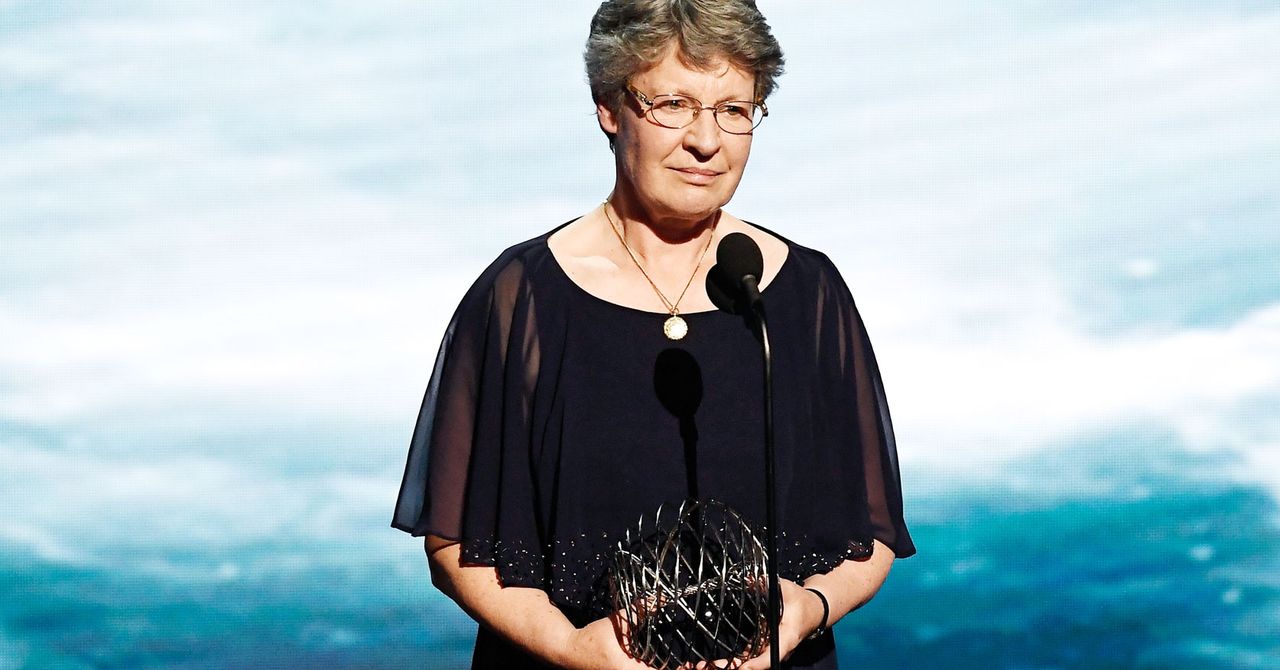
The selection process somewhat mirrors the peer review system utilized for academic articles, though it faces similar challenges. Historically, many prestigious scientific awards have been predominantly awarded to white males. This year, Jocelyn Bell Burnell, the recipient of the Special Breakthrough Prize in Fundamental Physics and famously overlooked for a Nobel Prize, advocated for greater diversity in nominations from universities worldwide during her red carpet interview. Nominations for next year’s awardees will open on April 30. Bell Burnell was among three female winners this year, and Milner expressed satisfaction about the increasing representation of women. She is contributing her prize money to establish PhD scholarships for students from underrepresented groups pursuing careers in basic science, emphasizing the importance of broadening diversity.
Award recipients have the freedom to allocate their substantial prizes as they wish. Many of this year’s winners indicated they would use their funds for practical expenses, like mortgages or educational costs for their children—or even to treat their lab teams. These prizes are particularly timely, as research funding, particularly for fundamental scientific inquiries, is increasingly constrained. “It’s unfortunate that individuals and prizes are having to take up more of the slack,” stated Brian Metzger, a New Horizons award winner recognized for his predictions regarding electrical signals from a neutron star merger. He noted the shrinking budgets from traditional sources like the National Science Foundation or NASA, making scientific funding more challenging. While private awards offer financial relief, they may also raise ethical concerns, particularly given possible connections to political influences in the current climate.