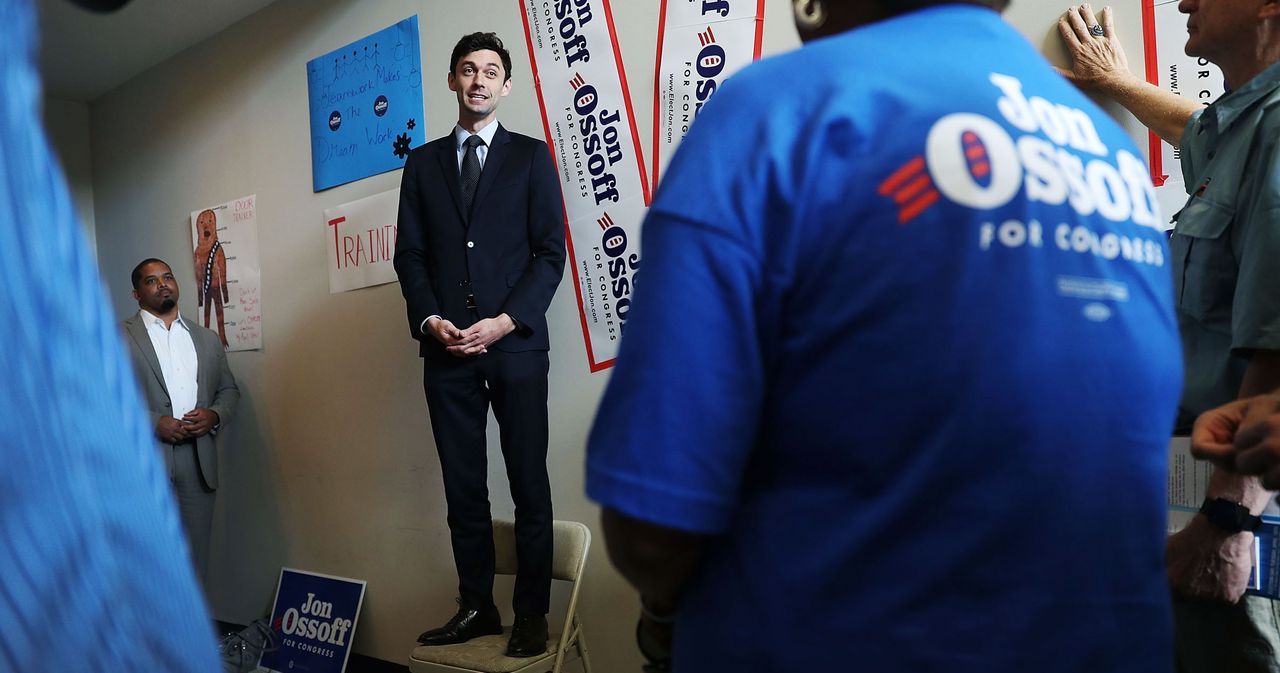
If Jon Ossoff, a Democrat, secures victory in today’s special election for Georgia’s 6th congressional district—a position held by Republicans since 1979—it won’t be due to his youthfulness, idealism, or charisma. Primarily, it will be because Ossoff is the first Democrat to significantly challenge the Republican dominance on Capitol Hill. As Democrats nationwide grapple with feelings of helplessness and guilt following the results of the November election, they have collectively invested an astonishing $8.3 million into Ossoff’s campaign.
Ossoff’s campaign exemplifies the influence of the so-called resistance emerging in the early days of Trump’s presidency. However, it also highlights the disorganized nature of this movement. Despite the enthusiasm, efforts to mobilize a grassroots liberal uprising against the Trump administration have mainly depended on anger and serendipity—taking advantage of various sporadic opportunities as they arise. Unfortunately, sustained anger can fade and fortune may not last.
In recent election cycles, both major parties have relied on rigorous data analysis to navigate the unpredictable moods of voters. In a similar vein, the resistance is beginning to utilize its own analytical resources.
One notable entity within this movement is Flippable, born out of the belief that progressives must choose their battles with wisdom, focusing on races where data indicates the best prospects for success. Established by three former staffers from Hillary Clinton’s campaign who were disheartened by the election results, Flippable seeks funding to help convert red districts into blue ones.
Currently, this nonprofit is channeling resources into special elections for state legislative positions, such as a recent state senate race in Delaware that garnered $130,000 in funding (which resulted in a win for their candidate). These isolated elections allow Flippable to concentrate their efforts more effectively. Targeting numerous races at once becomes much more challenging, particularly when many races coincide, as will occur with Virginia’s House of Delegates elections this November. The task will be even more daunting in 2018 when thousands of state legislative seats will be on the ballot nationwide.
To prepare for the expected influx of elections, Flippable has introduced its own predictive model designed to identify which districts are most likely to flip from red to blue. It is currently trialing this model by selecting five Virginia state house races for a community of 50,000 donors to support through a political action committee established by Flippable. While this approach may seem overly complicated in theory, it effectively equips grassroots donors with sophisticated data analysis typically reserved for large organizations like the Democratic National Committee.
Historically, contributing to races through the Democratic party has felt opaque, according to co-founder Catherine Vaughan. “Donors have no way of knowing whether it’s polls, personality, or backdoor politicking leading the party to back one candidate over another.” In an era where public trust in institutions is low, the founders of Flippable strive to bring clarity and openness to the funding process.
Flippable’s chief technology officer, Joseph Bandera-Duplantier, spent considerable time examining the variables that most accurately predict outcomes in state legislative contests. Previously an Android engineer for the Clinton campaign, he understood the impact of detailed data collection through ground efforts. However, state legislative races often lack the resources for such comprehensive analysis. Polls can provide insights at the national level but are often unreliable at the district level due to limited sample sizes and the obscurity of many local candidates. Bandera-Duplantier discovered that the most reliable metric for predicting a district’s voting tendency lies in its historical voting patterns over the past 30 years. This may seem straightforward, but he notes that larger institutions frequently overemphasize candidate backgrounds or shifting local demographics. Particularly at the state legislative level, districts that have historically voted Republican are likely to continue doing so. The key challenge for Flippable is to identify signs that suggest a traditionally red district’s electorate might be ready to support a Democratic candidate.