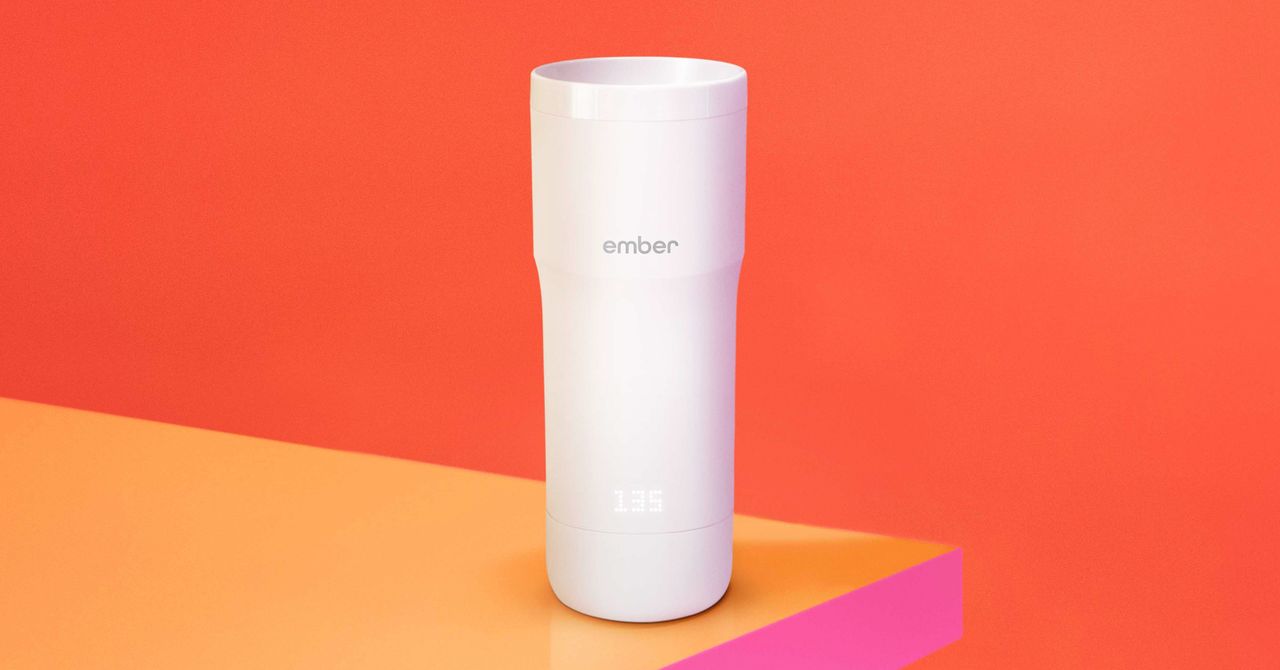
Do you recall Ember? While the name might not ring a bell, you might remember its groundbreaking product: a mug designed to maintain your beverage at the perfect temperature for hours on end. Recently, the company introduced some subtle enhancements to its offerings.
The latest update concerning the Ember Ceramic Mug and the Travel Mug is mildly evolutionary. In fact, the main focus of this update doesn’t even pertain directly to the mugs. Instead, it’s about an app that now syncs with Apple Health, allowing users to easily keep tabs on their caffeine intake—a feature that has been a part of Apple’s services since 2014. Additionally, the Travel Mug is now available in a white variant, and both mugs can be purchased through the Apple Store.
While these updates aren’t groundbreaking, it’s worth considering where Ember started. Flashback to October 2015 when the Ember Travel Mug first appeared on Indiegogo, a product born from the ambitions of thermal scientist Clay Alexander. It represented a trend that was prevalent during the early crowdfunding boom, where exciting concepts often struggled to deliver on promised functionality and affordability.
When Ember announced its Travel Mug, it provided a six-month timeline for launch. Anyone familiar with crowdfunding knows that such timeframes can be fraught with uncertainty—often leading to products that never see the light of day. The internet has seen countless well-intentioned projects that stalled in production, leaving hopeful backers empty-handed.
Ember, however, has managed to defy that disheartening narrative. Not only did the company launch its Travel Mug, but it also introduced the Ceramic Mug afterward. It transitioned from Indiegogo to an independent online store and delivered products that worked as intended. As noted by WIRED, the Ceramic Mug’s temperature control allows for perfect coffee enjoyment—"It’s hot without scalding… Ember keeps my coffee exactly right, for hours on end."
That said, not all reviewers have had glowing experiences. Some noted issues like staining on the Ceramic Mug that detracts from its visual appeal, and despite its premium price, the overall quality feels less luxurious, particularly the included coaster, which serves dual purposes as a charger. Regarding the Travel Mug, there are many other vacuum-insulated alternatives available at much lower prices that offer similar heat retention.
Nevertheless, in a tech landscape sometimes filled with fads that fizzle out, it’s encouraging that Ember’s innovative mugs not only exist but continue to function well and evolve. The company hints at broader ambitions, including potential applications in healthcare, indicating that its foundational technology could have diverse future uses.
With the endorsement of the Apple Store, Ember opens itself up to new growth opportunities. Although the caffeine tracking feature is a small step, it makes the app slightly more justifiable. While many might argue about the necessity of a heated mug—especially with price tags of $80 and $150—Ember’s journey illustrates a rare success in the gadget world: a bold idea that not only took flight but has continued to thrive.