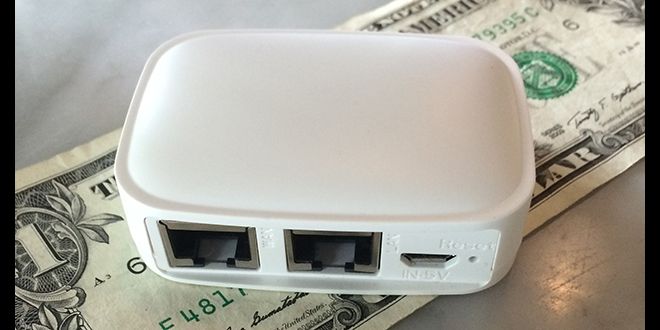
All August Germar sought was $7,500 to support his privacy-centric router project. However, as interest and debate surrounding his crowdfunding campaign intensified over a five-day span, he found himself with an astonishing 82 times that amount—only to end up with nothing.
On Friday afternoon, the crowdfunding platform halted the campaign for Anonabox, a venture aimed at selling a compact router priced at $45 that would route all a user’s online activity through the anonymous network Tor. The concept resonated with a growing demand for straightforward privacy solutions, quickly surpassing its initial funding goal by over tenfold within hours. Yet as backers contributed more than half a million dollars, they started scrutinizing Anonabox’s claims of custom hardware and the reliability of its software. This scrutiny led many to call for the project’s cancellation and encouraged others to report its deficiencies to the platform, which subsequently announced it would cancel all pledges made by investors.
In a message to supporters, the crowdfunding site stated only that “a review of the project uncovered evidence that it broke the platform’s rules.” These rules prohibit practices such as “offering purchased items while claiming to have made them yourself,” “misrepresenting someone else’s work as your own,” and “failing to disclose important facts about the project or its creator.”
Criticism of Anonabox began when users highlighted that the hardware which Germar had claimed was custom-designed could actually be purchased from Chinese suppliers on platforms like Alibaba. Germar later clarified that the prototype was constructed using a standard case and a nearly unmodified board, both sourced from the manufacturer Gainstrong. This clarification contradicted earlier assertions he had made, including the claim that the case was produced using a custom mold funded by Anonabox.
Further critiques targeted Anonabox’s software: the default settings left the wireless network accessible and included a hardcoded root password, potentially exposing users to hacking and surveillance. Critics pointed out that these security flaws were particularly troubling given that Anonabox was marketed to journalists and activists in oppressive political environments.
In the ensuing days, the total funding for Anonabox had decreased by over $25,000 as disenfranchised supporters withdrew their pledges. Following the campaign’s suspension, Germar did not respond to inquiries, nor did a spokesperson for the crowdfunding platform provide comments.
As the uproar surrounding Anonabox escalated, Germar mentioned earlier in the week that his original intent was not to target inexperienced users but rather developers who could offer feedback to enhance the router. However, contributors who invested in the project interpreted his claims as a promise of a user-friendly, secure device ready for the general public. Germar remarked, “I thought this would work like push-starting a car. Instead, it’s been like being handcuffed to a rocket.”
Many supporters on the suspended Anonabox campaign page praised the decision to cancel their pledges. “Thank you for protecting us! Good call,” wrote one user. “Thanks everyone for shining a light on this!” added another.
Conversely, some users expressed disappointment over the project’s cancellation and indicated a willingness to support a similar initiative to create a hardware-based Tor device if it were launched elsewhere. “Despite the apparent issues, I still want one,” remarked one backer. “So where do we go from here?”
“We need someone to step up for this project, and 9,000 of us have shown our interest,” commented another supporter. “Wherever August takes this next, count me in.”