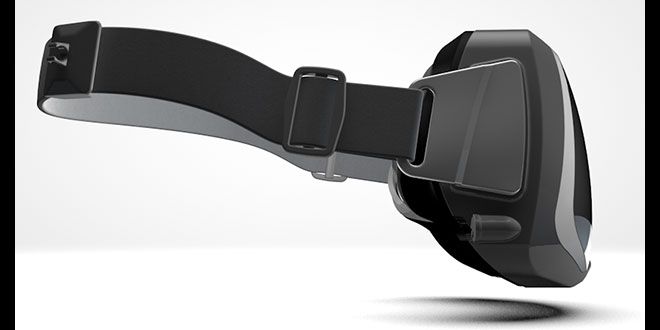
When Facebook acquired Oculus earlier this week, the virtual reality company secured $2 billion in cash, stock, and potential bonuses. However, Facebook also provided a significant boost to Kickstarter, the crowdfunding platform that originally supported Oculus. This $2 billion acquisition adds substantial credibility to Kickstarter and the myriad of projects it nurtures.
Industry experts believe that this deal will supercharge Kickstarter, creating a financial engine that now goes beyond just adventurous technologists. It’s a clear indication that Kickstarter has transcended hobbyist status and is increasingly integrated into the funding ecosystem for top-tier startups in Silicon Valley. “Whenever an event like this occurs, it attracts more attention to its source,” says Matt Murphy, a general partner at the prominent investment firm Kleiner Perkins Caufield & Byers.
Following the Facebook acquisition, Kickstarter can now draw the interest of a new wave of creators and attract a broader spectrum of venture capitalists beyond the unconventional investors who supported Oculus. This development could potentially democratize tech financing by subjecting prospective investments to a more thorough and impartial vetting process than what typically occurs in the traditional investment corridors of Silicon Valley.
“This opens the door for a wider array of ideas,” states Bubba Murarka, a partner at Draper Fisher Jurvetson. “This could lead to either a greater impact from each idea that makes it through or an increased volume of concepts reaching the end of the pipeline.”
Kickstarter has long been on the radar of venture capitalists. In fact, Oculus wasn’t even the largest Kickstarter project; the Pebble smartwatch raised $10 million, while OUYA garnered $8.6 million. Investors have viewed the platform as a method to assess consumer demand for specific products, particularly in the risky domain of consumer electronics. However, prior to Oculus, there were no standout financial successes, as the Pebble faced delays and mixed reviews, and OUYA’s game sales have been underwhelming. Neither project commanded valuations of $2 billion.
The Facebook acquisition serves to validate the resurgence of hardware startups through Kickstarter. “In conjunction with the Nest acquisition, it demonstrates that exits can indeed occur for young hardware companies,” remarks Gadi Amit, founder of NewDealDesign in San Francisco. “This is more than just a hint for VCs—after all, Oculus got its start without any investment from the conventional venture capital scene.”
Dave McClure of the seed fund 500 Startups concurs. He notes that hardware companies emerging from Kickstarter hadn’t been taken as seriously by venture capitalists, but the new reality underscores their appeal. Now, they’re seen as attractive investment opportunities for tech giants like Facebook, Twitter, and others. McClure anticipates that companies such as Google, Apple, and Amazon will also pursue these startups, which could further escalate valuations.
However, the support provided by Facebook transcends monetary measures; it carries a deeper significance. Facebook CEO Mark Zuckerberg approached Oculus with an enthusiasm akin to the thousands of Kickstarter backers who collectively contributed $2.4 million to launch the project. Instead of small financial backing, Zuckerberg invested $400 million in cash, along with 23 million shares, plus an additional $300 million tied to performance incentives.
During this week, Zuckerberg discussed Oculus’ advanced high-resolution goggles in almost reverential terms, suggesting they will revolutionize communications, entertainment, and education. “Picture not just sharing moments with friends online, but entire experiences and adventures,” he said. “Oculus has the capability to become the most social platform ever.” While this may seem exaggerated, it resonates with many in Silicon Valley eager to bootstrap new ventures.
Tarikh Korula, whose previous startup produced set-top boxes like the Ybox and Pixelmusic 3000, suggests that it wouldn’t be surprising if venture capitalists emulate Zuckerberg’s approach. His startup avoided external investments throughout its seven-year operation, but he acknowledges a shift in mindset today. “From my experience, it’s hackers who lead innovation, not VCs,” he asserts. “I’ve always believed that if Kickstarter had been available during the Ybox era, we could have successfully built a business around our hardware concepts.”