The Secret to Successful Crowdfunding Campaigns
These days, when you hear about crowdfunding, you often think of impressive campaigns that capture the spotlight. For example, Ouya raised an astonishing $2 million in a single day for a new Android gaming console, ultimately surpassing $5 million. Similarly, the Nifty MiniDrive, designed for Apple MacBooks, exceeded its modest $11,000 target by over 2,000% with 15 days left in its campaign.
However, alongside these success stories, many campaigns fall flat. What’s the secret to ensuring your project ends in triumph rather than frustration? Researchers, including Wharton School professor Ethan Mollick and social entrepreneur Jeanne Pi, analyzed data from nearly 50,000 crowdfunding initiatives. They identified four critical components that can dramatically improve the likelihood of campaign success: setting realistic goals, choosing the right timing, implementing effective marketing strategies, and fostering a strong social media presence.
-
Establish a Realistic Funding Goal
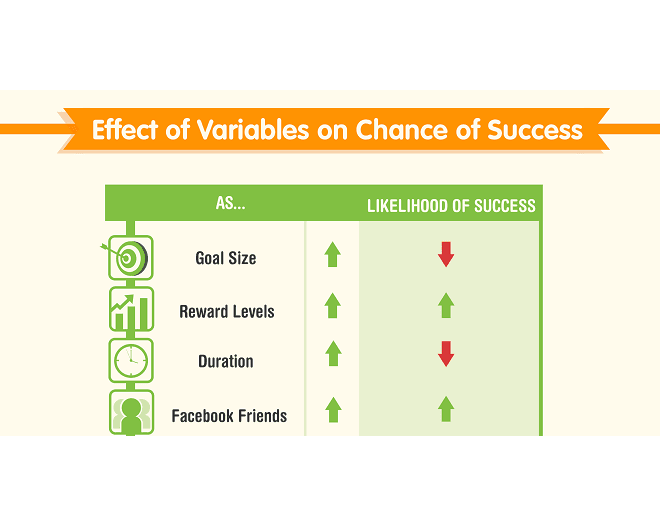
Setting a funding goal that is too ambitious can backfire, while one that’s too modest may not inspire confidence. Data suggests that campaigns targeting around $10,000 are the most likely to succeed, with a 38% funding rate. Conversely, aiming for $50,000 reduces the chance of reaching your goal to 18%. For those targeting $100,000 or more, success drops to just 7%. If you do opt for a high target, ensure that your product and team can justify the funding. -
Limit the Duration of Your Campaign
The average crowdfunding initiative runs for about 30 days, which is viewed as ideal for success. Campaigns that run for precisely 30 days have a 35% chance of securing funding. Extending the duration can signal indecisiveness; at the 60-day mark, the success rate falls to 29%. -
Create an Engaging Video
To attract attention on crowdfunding platforms, producing a high-quality video is imperative. Campaigns highlighted by site staff—often due to compelling presentations or engaging videos—have a significant advantage, with 89% achieving their funding goals. Even if your project isn’t featured, having a video can substantially improve your chances—campaigns with videos generally achieve a 38% success rate, while those without are successful only 15% of the time. A well-crafted video can differentiate your project in a crowded marketplace. - Leverage Your Social Network
The number of social media connections you have can play a crucial role in your campaign’s success. Founders with over 1,000 Facebook friends see their likelihood of success rise to 40%. In contrast, those with only 100 friends face an 80% chance of ending in failure. If your network consists of just 10 friends, your success rate drops to a mere 9%.
An example of these principles in action is the Bia smartwatch campaign, led by Sylvia Marino and her team. They set an ambitious funding goal of $400,000 but surpassed it by $8,000, reflecting thorough preparation. They ran their campaign for 40 days, just enough to build momentum. Their engaging video showcased the smartwatch and the vision behind it. Most importantly, they activated their social networks, intensifying their efforts on platforms like Twitter and Facebook during the final push. By urging supporters to enlist friends to back the project, they found significant financial support, ultimately securing over $98,000 in the campaign’s final day alone.
"People often assume they’ll easily reach their goals from day one, but that’s rarely the case," Marino reflects. "It requires sustained effort and commitment."